
Breast Augmentation in Fairfield County, Connecticut
Expert breast augmentation surgery in Trumbull and Fairfield County, CT, performed by board-certified plastic surgeon Dr. John Reilly.


Would You Like Fuller, More Proportional Breasts?
Some women are born with breasts that never developed the way they hoped. Others lose volume after pregnancy, breastfeeding, or weight changes and want to restore what was there before. Breast augmentation uses implants to add fullness, improve shape, and create a more balanced figure.
Breast augmentation, also called augmentation mammoplasty, is a surgical procedure that increases the size and improves the shape of the breasts using implants. Dr. Reilly works with each patient to choose the right implant type, size, and placement based on her frame, tissue, and goals. The result is breasts that look natural and proportional to the rest of the body.
Find out what breast augmentation at our Connecticut office can do for your shape. Schedule your consultation today.

Breast Augmentation at a Glance
Typically 1-2 hours
General anesthesia
1 week or less
Breast crease or areola edge
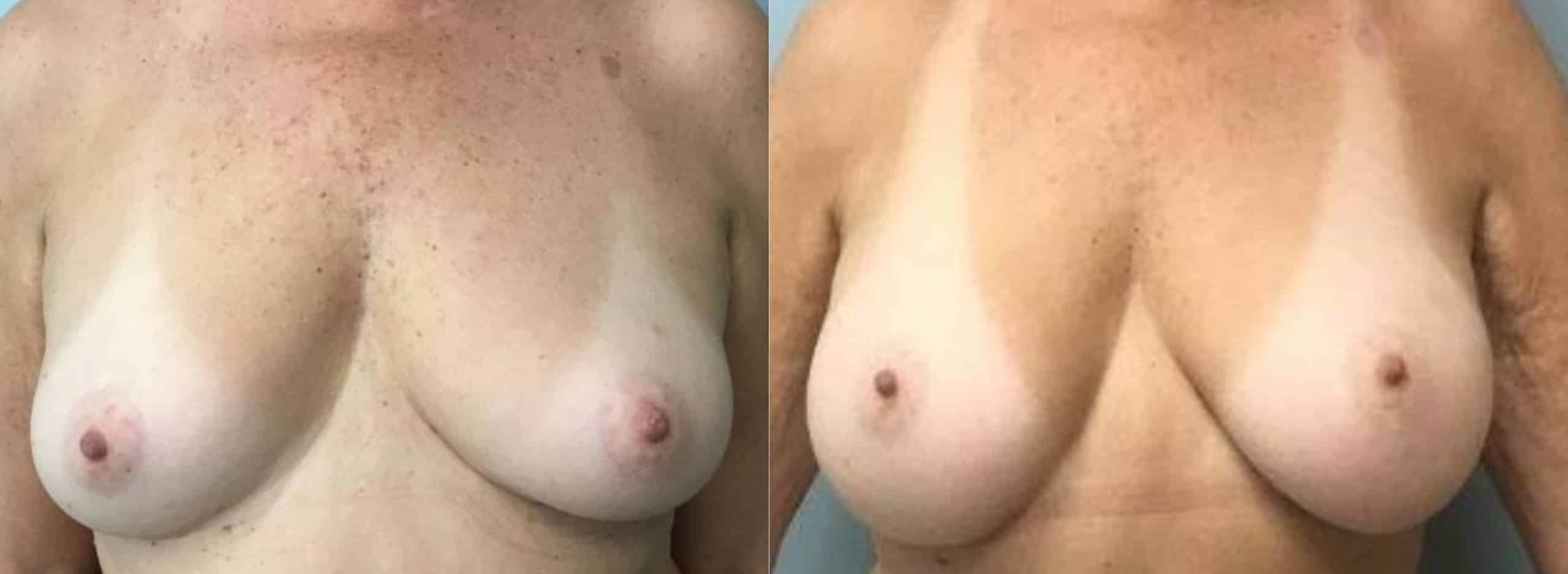
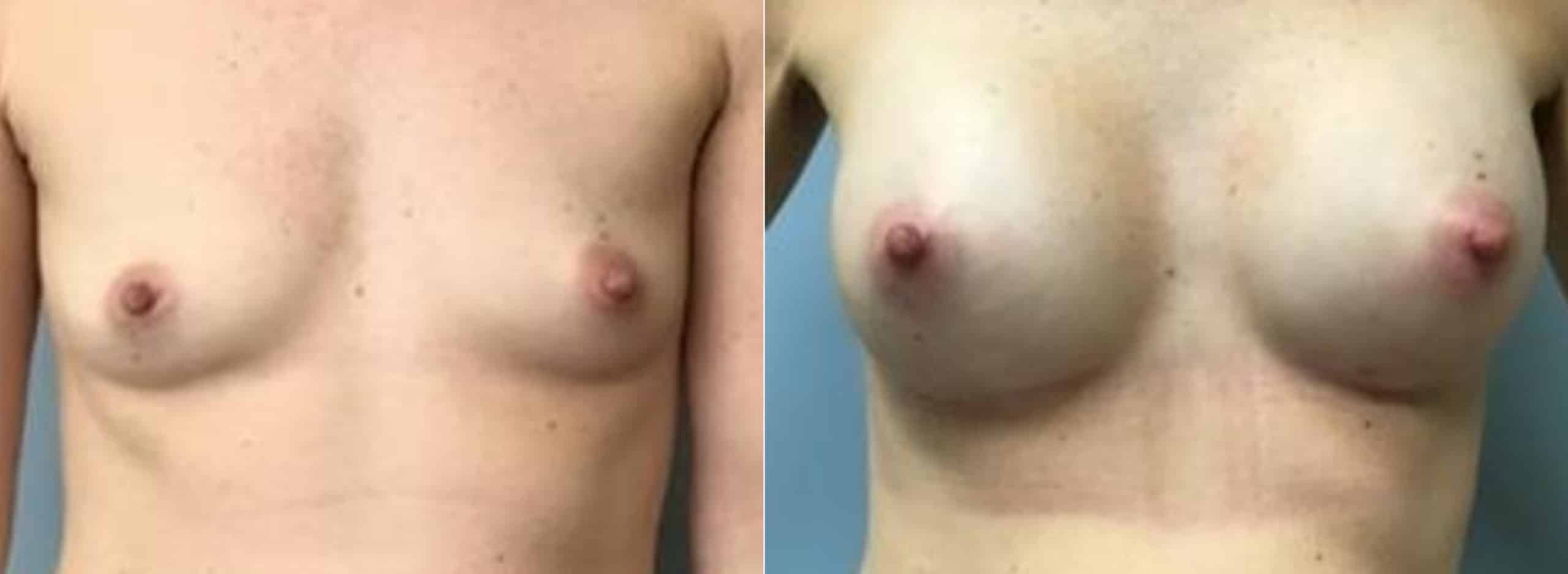


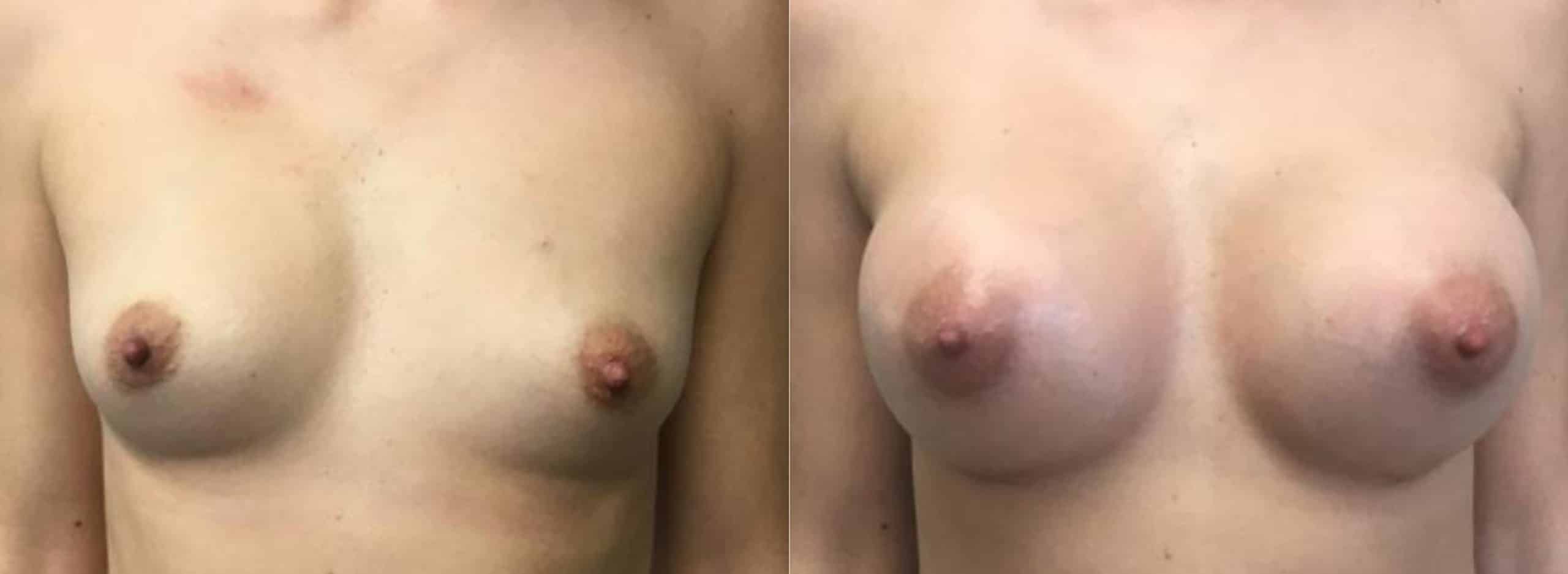

Benefits of Breast Augmentation
Breast augmentation is one of the most popular cosmetic procedures for a reason. Here is what patients typically experience after surgery.
- Increased Breast Fullness and Volume: Adds size and projection to breasts that are naturally small or have lost volume over time.
- Improved Breast Symmetry: Corrects noticeable differences in size or shape between the two breasts for a more even appearance.
- More Balanced Body Proportions: Creates a figure where the breasts look proportional to the hips, waist, and shoulders.
- Restored Shape After Pregnancy: Brings back fullness and projection that pregnancy, breastfeeding, or weight changes took away.
- Better Fitting Clothing and Swimwear: Makes bras, tops, dresses, and swimsuits fit more comfortably and look more flattering.
- Natural Look and Feel With Modern Implants: Today's silicone gel implants closely mimic the weight and softness of natural breast tissue.
Ideal Candidates for Breast Implants
Breast augmentation works best for women who have specific goals for the size, shape, or symmetry of their breasts. Here are the factors our surgeon evaluates.
Breasts That Are Naturally Small or Underdeveloped
You have always wanted fuller breasts, and your chest size has not matched the proportions you feel best in.
Volume Loss After Pregnancy or Breastfeeding
Your breasts lost fullness and deflated after nursing, and the shape has not returned on its own.
Noticeable Asymmetry Between the Two Breasts
One breast is noticeably smaller or shaped differently than the other, and the difference affects how clothing fits.
Fully Developed Breast Tissue
Your breasts should be fully developed before surgery, which typically means you are at least 18 for saline implants or 22 for silicone.
Stable Weight for at Least Several Months
Your weight has been steady, since fluctuations can change breast size and affect how your implants look over time.
Realistic Goals for Size and Shape
You want a natural improvement that fits your body rather than an extreme change that may not suit your frame.
How Breast Implants Add Volume and Shape
Your breast is made up of glandular tissue and fat, and these sit on top of the pectoralis major, which is the large chest muscle beneath. A layer of skin holds everything together and gives the breast its outer shape. The amount of natural tissue you have determines how full your breasts look and how much coverage sits between an implant and the surface of your skin.
When there is not enough natural volume, whether from genetics, aging, or post-pregnancy changes, the breast can look flat, deflated, or uneven. Implants solve this by adding volume from the inside. They sit in a pocket that our surgeon creates either behind the breast tissue or partially behind the chest muscle, and they push the overlying tissue forward to create fullness and projection.
The implant type matters too. Silicone gel implants are filled with a thick gel that feels similar to natural breast tissue and are the most popular choice. Saline implants are filled with sterile saltwater after placement and feel slightly firmer. Dr. Reilly helps each patient choose the right type, size, shape, and profile based on her measurements, tissue thickness, and the look she wants to achieve.
Choosing the right implant is only half the equation. Placing it in the right pocket, at the right position, with the right amount of coverage is what makes the result look natural.
— Dr. John Reilly

What to Expect During a Consultation at Our Connecticut Office
During your consultation, Dr. Reilly will measure your chest, assess your tissue thickness, and evaluate your natural breast shape. He will discuss your size and shape goals and help you compare different implant options so you feel confident in your choice.
Dr. Reilly will also explain the placement and incision options that best suit your anatomy. You will leave with a personalized surgical plan, a clear picture of what your results will look like, and answers to all of your questions.
Our team manages all scheduling and follow-up details from that point forward. We make the entire process straightforward so you can focus on preparing for surgery.
How to Prepare
A little preparation before surgery helps your procedure and recovery go smoothly. Here is what to do before your appointment.
Buy Supportive Post-Surgical Bras
Pick up two or three front-closure sports bras or surgical bras in the size our surgeon recommends so they are ready to wear right after surgery.
Set Up a Comfortable Sleep Area
Arrange pillows so you can sleep on your back in a slightly elevated position for the first one to two weeks after surgery.
Stock Up on Button-Front Tops
Choose shirts that button or zip in the front so you do not have to raise your arms overhead while your chest is healing.
Prepare Easy Meals in Advance
Cook and freeze simple, protein-rich meals before surgery so you can focus on resting during the first few days.
Stop Blood Thinners and Supplements
Our surgeon will give you a list of medications, vitamins, and supplements to pause at least two weeks before your procedure.
Arrange a Ride
You will need someone to drive you home from surgery and stay with you for at least the first 24 hours.
Good preparation sets the stage for a smoother breast augmentation recovery in Connecticut.
Breast Augmentation Procedure Steps
Breast augmentation follows a precise sequence of steps, and each one builds on the last. Here is what happens from start to finish so you know what to expect on the day of your surgery.
Before surgery begins, Dr. Reilly will review the plan with you and confirm the implant size, type, and placement you agreed on during your consultation. He marks your chest while you are sitting or standing upright to guide incision placement and implant positioning. Once the markings are set, you are taken to the operating room and general anesthesia is given so you are fully asleep and comfortable throughout the procedure.
A small incision is made in one of several possible locations: in the natural crease beneath the breast, along the lower edge of the areola, or in the armpit. The location depends on your anatomy and the approach you and Dr. Reilly chose together. Each option is designed to leave a scar that is hidden within a natural fold or border so it becomes very difficult to see once healed.
Through the incision, our surgeon creates a pocket where the implant will sit. If submuscular or dual-plane placement was chosen, the pocket is made partially beneath the pectoralis muscle. If subglandular placement was chosen, the pocket sits between the breast tissue and the muscle. The pocket is carefully shaped and sized to match the implant so it sits in the right position without shifting or rotating after surgery.
The implant is inserted into the pocket using a sterile delivery system to minimize contact with surrounding tissue. Once inside, our surgeon carefully adjusts the implant so it sits centered beneath the nipple with the right amount of projection and fullness. He checks the position from multiple angles and compares both sides to ensure the shape and symmetry look natural and balanced.
With both implants in place, the surgical team does a final check of size, shape, position, and symmetry. Small adjustments are made if needed. The incisions are then closed in layers with internal dissolvable stitches and fine surface sutures. Surgical tape or adhesive strips are then applied to protect the incision lines.
A supportive surgical bra or compression garment is placed over the chest to hold the implants in position and reduce swelling. You are then moved to the recovery room, where the care team monitors you as the anesthesia wears off. Most patients are ready to go home with a companion within about an hour.
Implant Approaches
Several implant placement options exist, and the right one depends on your anatomy, tissue thickness, and the result you want. Dr. Reilly will recommend the best approach during your consultation.
Dual-Plane Placement
This is the most widely used approach. The upper portion of the implant sits behind the chest muscle for added coverage, while the lower portion sits behind the breast tissue. It works well for most patients and provides a natural slope with good upper pole coverage that reduces visible implant edges.
Submuscular Placement
The implant is placed entirely beneath the pectoralis muscle. This approach provides the most tissue coverage over the implant and is best for patients with very little natural breast tissue. It can reduce the risk of visible edges and may lower the chance of capsular contracture, though recovery tends to be slightly more uncomfortable.
Subglandular Placement
The implant sits on top of the chest muscle and behind the breast tissue. This approach works well for patients with enough natural tissue to cover the implant and offers a quicker recovery with less post-operative discomfort. It is less commonly chosen today but remains a good option for the right candidate.
Combination Procedures
Many patients combine breast augmentation with other procedures to achieve a more complete result during one surgery and one recovery period.
Breast Lift
A breast lift is the most common procedure paired with augmentation. If your breasts have dropped and lost their position in addition to losing volume, implants alone may not be enough. A lift raises the breast tissue and repositions the nipple, while the implant adds fullness. Together, they restore both shape and size.
Fat Grafting
Fat grafting can be used alongside implants to add a layer of natural tissue coverage, smooth out the edges of the implant, or fine-tune the contour in specific areas. The fat is harvested through liposuction from another part of the body and injected around the implant for a softer, more natural transition.
Tummy Tuck
Breast augmentation combined with a tummy tuck is the foundation of many mommy makeover plans. This pairing addresses the two areas most commonly changed by pregnancy: the breasts and the abdomen. Having both done at once means one surgery, one recovery period, and a more balanced overall result.
Breast Augmentation Recovery Timeline
Every patient heals at their own pace, so your recovery from breast augmentation at our Connecticut office may differ from this general guide. Follow Dr. Reilly’s specific instructions for the best results.
Days 1-3
You will have the most tightness, swelling, and soreness during this window. Wear your surgical bra at all times, sleep on your back with your upper body slightly raised, and rest as much as possible.
Days 4-7
Swelling and bruising begin to improve, and the tightness across your chest starts to ease. Most patients with desk jobs can return to work by the end of the first week. Avoid lifting anything heavy or raising your arms above shoulder height.
Weeks 2-3
You will feel more comfortable and can resume most light daily activities. The implants may still sit high on the chest, which is normal at this stage. Swelling continues to go down, and our surgeon may clear you for light lower-body exercise.
Weeks 4-6
The implants begin to settle into a lower, more natural position. This is the start of what patients often call the “drop and fluff” phase. You can typically return to full exercise once we clear you at your follow-up visit.
Months 2-3
Your breasts continue to soften and the shape becomes more defined. The upper pole fullness relaxes, the lower pole fills out, and the implants feel more like a natural part of your body.
Months 3-6
Your final results become fully visible as the implants finish settling and the last traces of swelling resolve. Scars continue to fade and flatten into thin, pale lines that are easy to hide.
Dr. Reilly's Recovery Tips
- Wear your surgical bra around the clock
- Sleep on your back with your chest elevated
- Avoid heavy lifting for at least four weeks
- Skip underwire bras until fully cleared
- Follow any massage instructions from our surgeon
Why Choose Dr. Reilly for Breast Augmentation
If you are considering breast augmentation in Connecticut, Dr. Reilly brings the precision and aesthetic judgment this procedure demands. He focuses on results that look natural, feel soft, and stay in proportion with your body. Here is what sets his approach apart.
Personalized Implant Selection
Dr. Reilly uses detailed chest measurements and tissue assessments to recommend the right implant type, size, shape, and profile for your body. This data-driven approach avoids guesswork and produces results that look like they belong on your frame.
Precise Pocket Creation
The pocket where the implant sits determines how it looks and moves over time. He creates each pocket with exact dimensions so the implant stays centered, avoids shifting, and settles into a natural position as you heal.
Natural-Looking Results
The goal of every augmentation is breasts that look like yours, just fuller. Dr. Reilly selects the placement, profile, and volume to match your natural proportions so the result enhances your shape without looking overdone or out of balance.
Frequently Asked Questions
Silicone implants are filled with a thick gel that closely mimics the feel of natural breast tissue and are the most popular choice. Saline implants are filled with sterile saltwater after placement and feel slightly firmer. Dr. Reilly will explain the pros and cons of each during your consultation.
Implant size is based on your chest measurements, tissue thickness, and personal goals. Dr. Reilly uses precise measurements to recommend a size that fits your frame and produces the look you want. Trying on sizers during your consultation can also help.
The most common incision is placed in the natural crease beneath the breast, where the scar is hidden by the breast itself. Other options include along the lower edge of the areola or in the armpit. All options are designed to be as discreet as possible.
Modern implants are built to last many years, but they are not considered lifetime devices. Many patients enjoy their implants for ten to twenty years before any replacement is needed. Regular follow-up visits help monitor their condition over time.
Most women can breastfeed successfully after augmentation, though results vary depending on the incision location and implant placement. Dr. Reilly discusses this with every patient who may want to breastfeed in the future.
Most patients can return to light lower-body exercise within two to three weeks and resume full workouts, including upper-body routines, around four to six weeks after surgery. Our surgeon will clear you for specific activities at your follow-up visits.
After surgery, implants often sit high and feel tight on the chest. Over the following weeks and months, they gradually settle into a lower, softer, more natural position. This process is commonly called “drop and fluff” and typically takes three to six months to complete.
As with any surgery, breast augmentation carries risks such as infection, changes in nipple sensation, implant shifting, and capsular contracture. These are uncommon when the procedure is performed by a skilled surgeon, and Dr. Reilly reviews all potential risks with you during your consultation.
Ready to get started?
Book your consultation with Dr. Reilly and begin your journey to renewed confidence.
Book online
Pick a date and time that works for you. Get confirmed instantly – no waiting for a callback.
- Instant confirmation
- CT and NH availability
- Takes under 60 seconds
Prefer to send a message?
Fill out the form below and we’ll get back to you soon.